


What is PO Agricultural Film
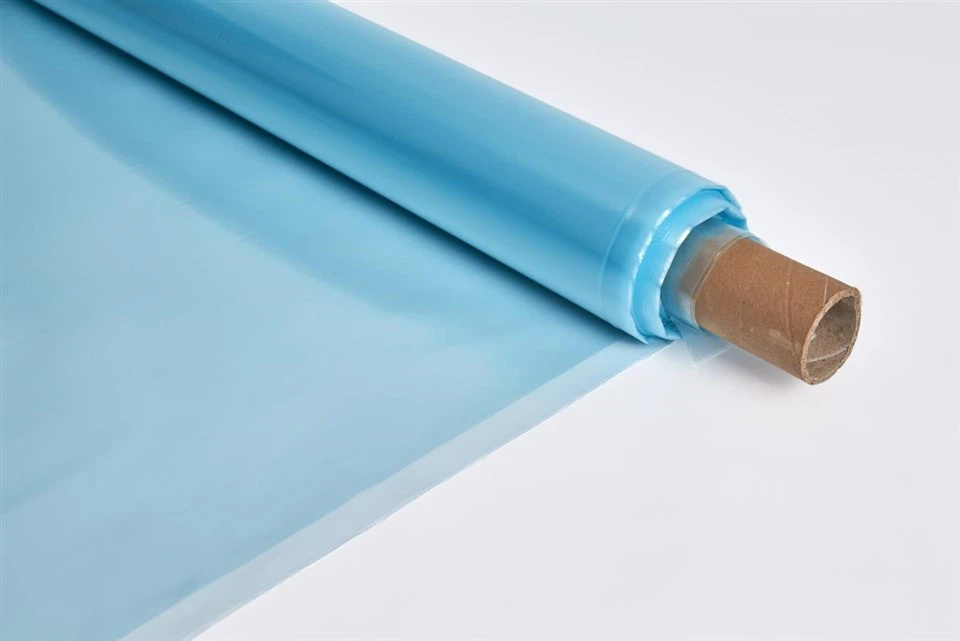
PO agricultural film is a new type of agricultural film produced recently using high-grade olefin raw materials and other additives, and using an external spraying and drying process. Its advantages are quite outstanding, compared with the traditional PE film and EVA film on the market, but the price is high.
Excellent transparency
High-tech cutting-edge technology, polymer synthesis, the light transmittance reaches more than 93%, and the light transmittance can still reach more than 90% in the second year of use. It heats up quickly in the morning and has good heat preservation at night. Especially in winter, the effect is very obvious under the same lighting conditions. For continuous cloudy days, foggy days are more obvious. A short period of light can raise the temperature.
Super strong continuous fog elimination and dripping ability
Existing shed films in China generally only last 3-6 months. Effectively suppresses the generation of fog. Water droplets form a water film on the membrane surface and flow down evenly. The fog elimination period of dripping can last up to 3-5 years. Effectively lower the temperature in the shed and reduce the occurrence of pests and diseases. And people feel comfortable working in the shed.
Powerful thermal insulation performance
Because the film contains a special heat preservation agent. Most of the heat radiated outside the shed is reflected back. Effectively locks in temperature. The night temperature under the same conditions is 1-3 degrees higher than that of EVA greenhouse film. It ensures the growth temperature of crops at night and shortens the maturity period.
Bactericidal performance is good
PO film makes the shed have sufficient light, quick temperature rise, early air release, reduced relative humidity, and light pests and diseases. More ultraviolet rays pass through, and the bactericidal performance is good, which can reduce the number of medications by more than 30%. Very suitable for green and environmentally friendly vegetable cultivation.



Why Choose Us
High quality
Our products are manufactured or executed to a very high standard, using the finest materials and manufacturing processes.
Professional team
Our professional team collaborates and communicates effectively with each other, and is dedicated to delivering high quality results. We are capable of handling complex challenges and projects that require our specialized expertise and experience.
Advanced equipment
A machine, tool or instrument designed with advanced technology and functionality to perform highly specific tasks with greater precision, efficiency and reliability.
24H online service
We try and respond to all concerns within 24 hours and our teams are always at your disposal in case of any emergencies.
Ordinary film generally refers to polyethylene PE film, the current use of polyethylene PE film in the country is the largest, before this, most shed farmers mainly use polyethylene PVC film, because PVC film is cheap, and the thermal insulation is not bad, but PVC film is not environmentally friendly, in the strong sunlight is easy to release harmful gases, will pollute the environment, so later the country began to vigorously promote the use of polyethylene PE film, because polyethylene is a non-toxic and harmless material. At present, there are many manufacturers of polyethylene PE film, so the ordinary film that the people think should refer to polyethylene PE film.
Polyethylene PE film can be divided into three types from the function, one is a longevity film with drops, also called aging resistant film, because the longevity film can not prevent droplets, so it is generally used in dry climate areas. The other is non-drip film, also called longevity drip film, is based on the longevity film, the inner side of the membrane is added dripping agent, so that it has the function of anti-dripping, so this longevity drip film has positive and negative sides, the outside is anti-aging, the inside is anti-dripping, can not be reversed. There is also a PE anti-fog film, which is based on the longevity drip film, adding anti-fog agent, which has a certain anti-fogging ability. PE anti-fog film also has front and back sides, which cannot be reversed.
PO membrane is a new type of agricultural greenhouse film, PO membrane compared with ordinary membrane, the difference is:
1) The transparency of PO film is generally higher than that of ordinary film, and the transparency of general PO film is above 90%, while the transparency of ordinary film is about 80%~85%.
2) Even if no additional thermal insulation agent is added, the thermal insulation performance of PO film is better than that of ordinary film.
3) PO film droplet performance is excellent, droplet validity period can be synchronized with the life of the membrane, while ordinary film, either no drip function, or drip validity period is very short, generally only 3-4 months.
4) PO film can eliminate fog for life, while ordinary film does not have anti-fog type, even if it is ordinary PE anti-fog film, its anti-fog performance is limited.
5) The droplet antimist performance of PO film does not depend on the addition of droplets and antifogging agent, but by coating liquid, through a special process, the coating liquid is coated on the inner surface of PO film, and then formed by drying. Therefore, the PO film also has positive and negative sides, the outside is anti-aging, the inner surface is a coating layer, and the drip is anti-fog.
6) The tensile strength of PO film, which is often said to be tensile force, is higher than that of ordinary film.
How Do You Know The Thickness Of The PO Agricultural Film You Buy And How Many
How can I know the thickness of the PO film I purchased? Here are a few ways to introduce you:
Method 1:
This is the most direct method, that is, buy a micrometer thickness gauge, measure it yourself and it will be clear.
Method 2:
Through the calculation formula can calculate the approximate thickness, first weigh out the weight of the PO film, assuming that it is 176.3 kg, what is the number of square meters originally purchased, assuming that the purchase length is 120 meters, the width is 10 meters, the width here must include the pressing edge, if it is a single pressing edge, it needs to be increased by 0.1 meters, if it is a double pressing edge, the width needs to be increased by 0.2 meters, the pressing width of each manufacturer is different, and it can be calculated according to the actual pressing width. Assuming that it is a single pressed edge, it can be calculated that the square number is 120 * (10 + 0.1) = 1212 square meters. The density of Dongda PO film is 0.97, and the density of PO film of other manufacturers may not be exactly the same, according to the actual situation, consult the dealer or manufacturer. In this way, the approximate thickness can be calculated as 176.3÷1212÷ 0.97 = 0.149 mm, that is, a 15-filament thick PO film. 1 filament is equal to 0.01 mm.
It should be noted that because of the production technology and process, the thickness uniformity of the PO film produced by various manufacturers is not the same. Why, because the thickness of the PO film changes within a certain range in the process of blow molding processing, just like blowing bubbles, the thickness of the bubbles is different in each place, but the state has issued standards for the uniformity error of the thickness of the film. As long as the error within the national standard, it is acceptable. If the thickness is uneven, it will shorten the service life of the PO film.
What Is The Difference Between PE Film And PO Agricultural Film
The difference between PE film and PO film is mainly reflected in the following aspects:
In terms of transparency
The transparency of PO film is generally higher than that of PE film, and the transparency of PO film is about 90% or more. High transparency means high light transmission.
In terms of tensile resistance
The tensile strength of PO film is also better than that of PE film, because more metallocene is added to the PO film.
In terms of heat preservation
The heat preservation of PO film is significantly higher than that of PE film, and organic insulation agent imported from Japan is added to Dongda PO film.
In terms of droplet anti-fogging performance
PO film can achieve lifelong anti-droplet anti-fog, while PE film generally does not prevent droplets, nor does it eliminate fog, and the PE double anti-film with the addition of drip agent in time is only a short 3-month anti-drip period, and does not have the ability to eliminate fog.
Resistance to diseases and pests
PO film is better than PE film, because the anti-drip mist of PO film makes the crops in the shed no longer produce mold due to dripping.
Several Measures To Reuse PO Agricultural Film
Reducing the cost of agricultural production is conducive to the development of agriculture. PO agricultural film can be reused if used properly. Here are several measures to achieve PO agricultural film reuse:
1. Cover the PO agricultural film directly on the surface of the sown or cultivated crops, and take back the mulch film after the temperature rises, store it for reuse. This kind of mulch is temporary covering, which is short in time and has little damage to the mulch. Used in spring and autumn, it can keep crops warm and protect from wind and rain.
2. One mulch, multiple stubble continuous planting: Spring crops are covered with PO agricultural film, which remains intact after summer harvest, and continues to be used in autumn, or covered in autumn and used in winter. Such as spring cucumbers, beans and other covered agricultural film, autumn can be used to grow Chinese cabbage, kale, etc. In this way, the same PO agricultural film can be used in spring and autumn, which can increase the temperature and accumulated temperature and reduce investment.
3. Make a small arch shed first, and then make mulch film: First use the plastic film for the small arch shed, and then use the ground film after falling, which can be used for the cultivation of early maturing crops in spring. The bamboo pieces or branches used for the arch should be smooth and free of sharp corners to avoid scratching the film.
4. Old membrane sleeve new film, double film cover: After early spring crop sowing, cover the new film on the surface, and then make the old PO film into a small arch shed to cover the outside of the new film; Or after the crop seedlings are planted, use the new membrane hole to make the mulch film, and make the outside as a small arch shed to cover the old film, which can improve the moisture of the soil, promote seed germination and the growth of seedlings, so that the old film can be reused, and the stubble under the new film will continue to be used.
How PO Agricultural Film Can Be Used for Multiple Purposes
1. Cover once and plant multiple crops continuously. Use mulching film to cover spring crops, keep it intact after summer harvest, and continue to use it in autumn, or cover it in autumn and use it again in winter. After the previous crop is harvested, the mulch film should be kept intact. When sowing the next crop, dirt on the mulch should be removed. If there are holes, seal them with wet soil, or soak the new film 2-3 times larger than the hole in water and stick it to the hole. Sowing or planting should be done in the original holes. For example, the mulch film covered with cucumbers, beans, etc. in spring can be used to grow Chinese cabbage, cabbage, etc. in autumn. In this way, the same mulch film can be used in spring and autumn to increase ground temperature and accumulated temperature while reducing investment.
2. Make a small shed first, and then make a mulch. First use the plastic film as a small shed, then drop it after the temperature rises, and use the holes as mulch. The bamboo pieces or branches used for arching are required to be smooth and have no sharp corners to avoid damaging the film.
3. Flat cover with mulch film, can be used multiple times. Cover the mulch directly on the surface of the sown border or cultivated crops. After the temperature rises, take back the mulch film and store it for reuse. It is required that the border surface be finely chopped, smooth and free of debris, and the surrounding areas should be pressed tightly after covering. This kind of coverage is temporary coverage, which is short-term and causes little damage to the mulch film. Used in spring and autumn, it can keep heat and moisture, and protect against wind and rain. Take it back carefully after use and remove dirt for later use.
4. Cover the old film with the new film, covering it with double film. After the crops are sown in early spring, the new film is covered on the border surface, and then the old film is used as a small arch to cover the new film. Or after the crop seedlings are planted, use the holes in the new film as mulch, and make a small arch outside to cover the old film. It can increase soil temperature and promote seed germination and seedling growth. The old film can be used once, and the new film can be used next time.
5. Covering ditches and furrows, can be used multiple times. Use the furrow cover cultivation method, change to high furrow sowing or set the value to high furrow planting. That is, on the high border of 15-20 cm high and 60-70 cm wide, two ditches 15-20 cm wide and 20 cm deep are opened. When sowing or planting in the ditch, cover the film flatly on the border surface. When the seedlings are in contact with the film, the film can be stored for next use, or holes can be opened for mulching.
Correct Installation and Use Techniques of PO Agricultural Film

1. The agricultural film must be stored in a shaded and dry place before installation and use, and must not be exposed to the sun or rain. If installed in winter, it is advisable to place the agricultural film at room temperature (2-3 degrees Celsius) before installation.
2. The iron and metal wires in the shed structure should be well electroplated, and dirty and rusty components should not be used. At the same time, avoid using exposed metal wires and creating sharp angles to prevent tearing of the agricultural film.
3. When installing, the agricultural film must be tightened and flattened to avoid affecting the use effect. For example, our company's Kelun PO film has many functions such as light transmission, heat preservation, anti-drip, and anti-dust accumulation. However, if installed improperly, it will not only fail to perform its intended function, but will also seriously affect its service life.
4. Do not install the agricultural film upside down, otherwise it will not be able to perform its function. If the PO film is marked with the words "This side faces up", you can read the words from the front by standing inside the greenhouse and looking up.
5. The film should not be installed when the temperature is too high, because the film will expand due to heat, and will shrink when the temperature drops, causing breakage and tearing. Once a rupture occurs, it should be repaired with special repair tape to avoid affecting the functional effect of the agricultural film.
6. Before opening the film roll, check the ground conditions at the work site to avoid objects puncturing or scratching the film.
7. Do not walk on the film, and do not place assembly tools or other objects on the film to prevent the film from being broken.
8. Special attention should be paid to avoiding direct connection between the film and greenhouse components as much as possible. If it cannot be avoided, white acrylic-vinyl should be applied to the connection area, and mixed organic solvents should not be applied.
9. Avoid direct contact between crops, irrigation, heating pipes and other equipment and the film.
10. Do not burn vegetable leaves, crop straw, etc. inside or outside room temperature to avoid damaging the film.
11. Try to limit the maximum usage of pesticides, herbicides, and biological treatment products, and control the concentration of sulfur and hydrogen mixtures.
12. When using pesticides on plants, avoid spraying them on the film.
13. Prevent the accumulation of pesticides at the contact points between the film and greenhouse components. The greenhouse should be ventilated as soon as possible after applying pesticides.
14. Where the film is covered, an appropriate amount of soil should be piled on the film to prevent damage to the film from spraying disinfectants.
FAQ
Q: What is agri film?
Q: What is plastic film in agriculture?
Q: What is agriculture films?
Agricultural films are used to protect crops and plants in open fields or greenhouses throughout their life cycle. They reduce the crop spoilage risk associated with weather, pests, and weeds, and help in improving the overall crop quality.
Q: What is the purpose of plastic film?
Q: What is plastic film used for?
Q: What is mulching film?
Q: What are organic films?
Q: What is mulch film made of?
Q: How is plastic film produced?
Q: Is plastic film actually recycled?
Q: Is film the same as plastic?
Q: What is biodegradable plastic film?
Q: What type of plastic is plastic film?
Q: What happens to recycled plastic film?
Q: What are the uses of agricultural film?
Q: What are the benefits of biodegradable plastic mulch?
Q: What are the benefits of plastic mulching?
Q: What is the meaning of agricultural film?
Q: How can mulching be improved?
Q: How to prevent mulch?
Hot Tags: po agricultural film, China po agricultural film suppliers, factory, Special Film for Animal Husbandry, EVA Agricultural Film Series Products, Longevity Agricultural Film, Silver Black Plastic Film, PO Agriculture Greenhouse Plastic Film, Light Conversion Film Series