

Geomembrane
What is Geomembrane
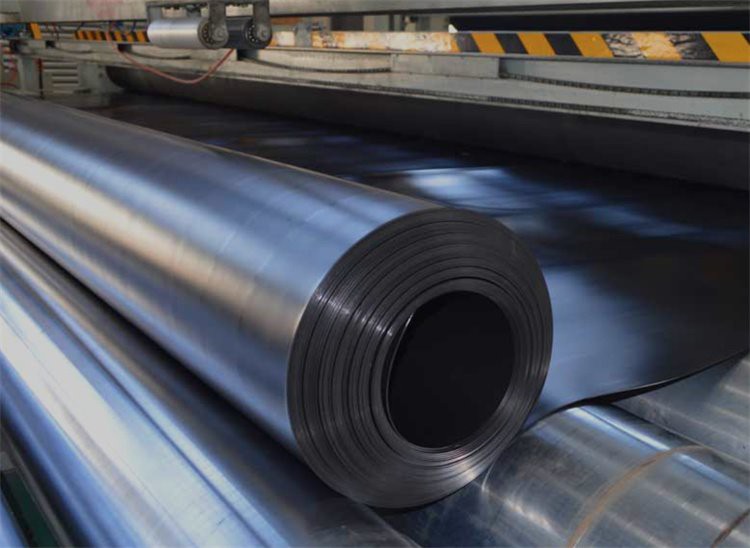
Geomembrane is very low permeability synthetic membrane liner or barrier used with any geotechnical engineering related material so as to control fluid (liquid or gas) migration in a human-made project, structure, or system. Geomembranes are made from relatively thin continuous polymeric sheets, but they can also be made from the impregnation of geotextiles with asphalt, elastomer or polymer sprays, or as multilayered bitumen geocomposites. Continuous polymer sheet geomembranes are, by far, the most common.
Water conservation
Geomembranes are ideal for lining reservoirs, canals, and ponds. The sheets prevent seepage into groundwater and retain more water at the surface for productive use. This enables improved irrigation efficiency, especially in arid regions. Canal lining also controls erosion and structural deterioration, significantly extending service life. Overall, geomembranes enable smarter water usage.
Durability
Unlike compacted clay and other natural liners, geomembranes are highly resistant to chemicals, acids, oils and temperature swings. Proper installation results in a continuous non-permeable layer with a long service life. Regular inspections help identify and repair any damage that could occur over decades of use.
Reduced construction efforts
Compared to compacted clay liners, geomembrane installation is quick and efficient. Large sheets can rapidly cover expansive areas without intensive earthmoving or water needs. This cuts equipment usage, labor, costs and environmental impact. Lining existing sites is achievable with limited disturbance.
Leak monitoring capacity
Underlying drainage/leak detection systems can be integrated with geomembranes. Any liquid captured signifies a liner breach before major failures occur. This enables proactive identification and repair of defects to maintain barrier integrity. Regular monitoring ensures performance over time.
-
![Waterproof Impermeable PE Five-layer Composite Geomembrane]() Waterproof Impermeable PE Five-layer Composite GeomembraneGeomembrane is a durable and versatile material used in various applications, from fish ponds to agriculture and landfills. This synthetic liner prevents contaminants from entering the soil and...read more
Waterproof Impermeable PE Five-layer Composite GeomembraneGeomembrane is a durable and versatile material used in various applications, from fish ponds to agriculture and landfills. This synthetic liner prevents contaminants from entering the soil and...read more -
![Geomembrane LLDPE]() Geomembrane LLDPELLDPE geomembrane is manufactured from virgin polyethylene resins, offering great flexibility and outstanding resistance to low temperature and ultraviolet exposure. High-quality and economical,...read more
Geomembrane LLDPELLDPE geomembrane is manufactured from virgin polyethylene resins, offering great flexibility and outstanding resistance to low temperature and ultraviolet exposure. High-quality and economical,...read more -
![Waterproof Impermeable PE Five-layer Composite Geomembrane]() Waterproof Impermeable PE Five-layer Composite GeomembraneGeomembrane is a durable and versatile material used in various applications, from fish ponds to agriculture and landfills. This synthetic liner prevents contaminants from entering the soil and...read more
Waterproof Impermeable PE Five-layer Composite GeomembraneGeomembrane is a durable and versatile material used in various applications, from fish ponds to agriculture and landfills. This synthetic liner prevents contaminants from entering the soil and...read more -
![Geomembrane LLDPE]() Geomembrane LLDPEGeomembrane LLDPE high seepage control coefficient, chemical stability, anti-aging properties, resistance to plant roots high mechanical strength, low cost, high efficiency, fast construction,...read more
Geomembrane LLDPEGeomembrane LLDPE high seepage control coefficient, chemical stability, anti-aging properties, resistance to plant roots high mechanical strength, low cost, high efficiency, fast construction,...read more


Why Choose Us
High quality
Our products are manufactured or executed to a very high standard, using the finest materials and manufacturing processes.
Professional team
Our professional team collaborates and communicates effectively with each other, and is dedicated to delivering high quality results. We are capable of handling complex challenges and projects that require our specialized expertise and experience.
Advanced equipment
A machine, tool or instrument designed with advanced technology and functionality to perform highly specific tasks with greater precision, efficiency and reliability.
24H online service
We try and respond to all concerns within 24 hours and our teams are always at your disposal in case of any emergencies.
Types of Geomembrance
PVC geomembrane
PVC (Polyvinyl Chloride) geomembranes is a thermoplastic waterproofing material made with vinyl, plasticizers, and stabilizers.
When ethylene dichloride is cracked into a dichloride, the result is then polymerized to make the polyvinyl chloride resin used for PVC geomembranes.
PVC geomembrane is tear, abrasion, and puncture-resistant, making them suitable for constructing canals, landfills, soil remediation, wastewater lagoon liners, and tank linings.
The material is also perfect for maintaining potable drinking water and preventing contaminants from entering water sources.
TRP geomembrane
A TRP (Reinforced Polyethylene) geomembrane uses polyethylene fabric for long-term water containment and industrial waste applications.
TRP geomembranes are an ideal choice for soil remediation, landfills, canals, lining temporary retaining ponds, agricultural & municipal applications due to their low-temperature range, chemical resistance, and ultraviolet stability.
HDPE geomembrane
High-Density Polyethylene (HDPE) is characterized by strong UV/temperature resistance, inexpensive material cost, durability, and high resistance to chemicals.
It is the most commonly used geomembrane because it offers higher thickness which other geomembranes don't. HDPE is the preferred choice for pond and canal lining projects, landfill, and reservoir covers.
Thanks to its chemical resistance, HDPE can be used in storing potable water.
LLDPE geomembrane
LLDPE (Linear Low-Density Polyethylene) geomembrane is made with virgin polyethylene resins which make it strong, durable, and resistant to UV & low temperature.
Engineers and installers who require an impermeable geomembrane usually opt for LLDPE as it offers more flexibility compared to HDPE.
They are used in industrial applications, such as animal & environmental waste containments as well as liquid storage tanks.
RPP geomembrane
RPP (Reinforced Polypropylene) geomembranes are polyester-reinforced liners made from a UV-stabilized polypropylene copolymer that gives the material stability, chemical resistance, and flexibility.
Its strength and durability can be traced to the support it gets with nylon scrim. RPP geomembranes are ideal for long-term water containment and industrial waste applications.
RPP is perfect for municipal applications, evaporation pond liners, aqua & horticulture, and mine tailings.
EPDM geomembrane
EPDM (Ethylene Propylene Diene Monomer) geomembrane has a rubber-like texture that makes for its durability, UV-stability, strength, and flexibility.
They are ideal for extreme weather conditions and for resisting punctures. EPDM geomembranes are easy to install, typically used as surface barriers for dams, liners, covers, backyard landscape, and other irrigation sites.
Frozen, pooling, flowing, wastewater, and standing liquids can be hazardous if not properly managed. Hence, geomembranes are used to prevent the loss of material.
The following are uses of geomembranes:
As liners for various waste conveyance canals
As waterproofing liners within tunnels and pipelines
As liners for the agriculture industry
As liners for potable or reserve water (for example, safe shutdown of nuclear facilities)
To contain and transport potable water and other liquids in the ocean
As liners for the agriculture industry
As fish pond liners
Beneath highways to prevent pollution from deicing salts
As liners for primary, secondary, or/and tertiary waste piles and solid-waste landfills
Adjacent and beneath highways to capture hazardous liquid spills
As liners for sewage sludge, radioactive or hazardous waste liquid
As linings for emergency spillways
To contain and transport liquids in trucks
5 Key Factors to Consider When Selecting a Geomembrane
Material type
Different geomembrane materials offer varying levels of durability, flexibility, and chemical resistance. Common materials include high-density polyethylene (HDPE), linear low-density polyethylene (LLDPE), polyvinyl chloride (PVC), and more. Consider the properties of each material and choose one that best suits your application, taking into account the substances it will be in contact with and the environmental conditions.
Thickness
Geomembrane thickness is crucial for its overall performance, including puncture resistance and durability. Thicker geomembranes generally offer better protection and longevity, but they may also be less flexible and more challenging to install. Choose a thickness that balances the need for strength and durability with ease of installation and project requirements.
Site conditions
Evaluate the site conditions where the geomembrane will be installed. Consider factors such as soil type, groundwater levels, temperature fluctuations, and potential exposure to chemicals or UV radiation. Understanding the site conditions will help you select a geomembrane with the appropriate properties and ensure its long-term performance.
Installation method
The method of installation can significantly impact the effectiveness and longevity of a geomembrane. Common installation methods include welding, adhesive bonding, and mechanical fastening. Determine the most appropriate installation method for your project and ensure proper installation procedures are followed.
Manufacturer and supplier reputation
Choosing a reliable and reputable geomembrane manufacturer and supplier, is critical. Ensure the manufacturer has a proven track record of providing high-quality products that meet industry standards and certifications.
Choosing the Right Material for a Geomembrane Liner
Woven vs non-woven
Almost all geomembranes are extruded and non-woven to avoid small openings that would let water flow through. Geotextiles are often woven, which is one easy way to tell the difference between these two geosynthetics. A woven or even matted fibrous material will almost never offer enough impermeability to qualify as a geomembrane liner, especially for ponds and related structures. If water containment or vapor blocking is a secondary or primary goal, stick with a non-woven product. Woven geomembranes are too permeable to function well for these purposes.
Polyethylene (PE) and reinforced polyethylene (RPE)
Various forms of polyethylene tend to offer the best results when used for making geomembranes. High density polyethylene (HDPE) is commonly used, but it's often too thick and inflexible for demanding lining applications. Low density polyethylene (LDPE) offers better flexibility, but at the cost of durability and strength. Reinforced polyethylene (RPE) from offers the best of both materials by combining them into a single impermeable sheet. The addition of a reinforcement mesh boosts tear resistance dramatically. RPE is also chemical resistant, comes in food and fish safe formulations, and is thinner than other materials used for geomembranes without sacrificing strength. This makes it the easiest liner material to install on large commercial projects.
Polyvinyl chloride (PVC)
PVC is one of the most widely available polymers used for geomembranes. It's a highly flexible and relatively strong material, but it still has many downsides when used specifically as a liner. First, it's not very chemical resistant. If the liner is installed in an exposed design, PVC tends to break down faster than other polymers due to weathering and UV degradation. It's also prone to becoming damaged by both high and low temperature extremes, making it a poor choice for lining roadways in practically any climate. Finally, PVC seams are also trickier to seal on site than RPE and other polyethylene products. Getting tight seams is essential for a leak-proof pond or containment area, so avoid PVC for these projects.
Polypropylene (PP)
Polypropylene geomembranes, often marked as fPP since there are rigid forms as well, are not as widely used as PVC or RPE liners. This material is easily fabricated in large sizes in the factory to reduce seams. However, this feature is balanced out by the material's weakness towards chlorine and other chemical additives in water. It's particularly reactive to hydrocarbons, making it a poor choice for lining refinery and mining holding and processing ponds. fPP is generally only used for ponds and some roadway projects, and it's not even the best choice for these uses in most cases.
Chlorosulfonated polyethylene (CSPE)
CSPE is a modern, rubber polymer formula designed to overcome many of the limitations of PVC and other materials. It's specifically designed to resist damage from chemical reactions and corrosive mixtures, allowing it to directly contain hazardous compounds over years without breaking down. This material is also highly resistant to damage from ozone and sunlight, making it a good choice for exposed installation.
Polyester (PET)
Polyester is not as commonly used for impermeable geomembranes as the materials listed above. Yet it is still used at times, in conjunction with thicker geotextiles, as a finished layer on top for a smoother surface. If a ribbed or dotted geomembrane needs a barrier to prevent sediment from filling in its drainage surface, a thin layer of polyester liner may be used to separate the soil. Polyester breaks down more quickly than other materials, especially when installed in an exposed way, so it's best avoided except for temporary stabilization purposes. This material is more versatile in a geotextile form than as an impermeable geomembrane.
Polyurethane (PUR)
Polyurethane was once the most widely used geomembrane material, but it's largely fallen out of favor for more modern polymers. It's also unique in its ability to offer spray installation. Installers spray a thick layer of liquid PUR polymer over a fabric backing to conform exactly to the shape of the ground. While this was once necessary for some projects, today's flexible RPE liners can offer nearly as much conformity without the extra labor for installation. Each of the benefits of polyurethane, such as chemical resistance or good flexibility, is matched or exceeded by the features of RPE liners. Unless you're planning a highly reactive chemical storage project that specifies polyurethane as the only option, consider RPE instead for a wider range of exposed installation options.
Not all geomembrane tarps have the right color combination for optimal tarp lifespan and performance. The best tarps, regardless of material or design, will feature a dark color on one side to extend the lifespan and a lighter color on the other to reflect heat and UV rays. Meets this requirement by pairing a white outer layer and black inner layer. If you’re looking for heat absorption to maximize germination instead, simply flip the tarp. Most geomembranes designed only for buried use are black or dark blue on all sides, causing them to absorb more UV rays and to heat up rapidly in the sun. Stick with geomembranes designed and approved for tarp use to get the best results.
How to Install and Maintain Geomembrane for a Long Period of Time
Prepare the surface
Before installing the waterproof geomembrane, it is essential to prepare the surface to ensure it is clean, smooth, and free from debris, sharp objects, and projections, as these things may puncture or damage the membrane. The surface preparation procedure may involve the processes of grading, compacting, and smoothing the surface and removing any rocks, roots, or other obstacles.
Many types of waterproof geomembranes are available, each with distinctive properties and suitability for different applications. It is crucial to choose the right geomembrane according to the project's specifications, the nature of the elements present in the surface area, the anticipated conditions and stresses, and the required level of performance.
Use proper equipment
The installation process may require specialized equipment such as welding machines, hot air guns, or rollers. Ensure all equipment is in good working condition and used according to the manufacturer's instructions.
Seam and seal correctly
Good seam and seal installation is critical to ensure the effectiveness of the waterproof geomembrane. Overlapping seams, welding seams, and sealing joints are some standard methods of connecting the membrane to secure it and fit it tightly.
Regular inspections
Regular inspections help detect and address potential problems before they become significant issues. Reviews should include visual checks for signs of damage, wear, or deterioration and testing for leaks or other cracks/openings in the membrane.
Prompt repairs
Any damage or defects that are identified during inspections should be repaired promptly. The repairing process may involve patching, welding, or sealing the affected area, depending on the damage's severity.
Avoid damage
Avoid activities that can damage or puncture the membrane, such as digging or drilling in the immediate area of the membrane. It is alsoessential to ensure that any heavy equipment or machinery used in the area is adequately supported to prevent excess weight from causing damage.
Clean regularly
Regular cleaning is very helpful in preventing the build-up of debris or other materials that could rupture the membrane. It is recommended to use gentle cleaning methods to avoid harsh chemicals or abrasive materials that could scratch or damage the surface.
Consider weather and environmental factors
Sometimes extreme weather, such as high winds or heavy rain, may stress the waterproof geomembrane more. It is better to consider all the potential impacts of these factors when designing and maintaining the membrane and take appropriate precautions to protect it from any damage.
Products Description
Q: What is the purpose of geo membrane?
Q: What is the difference between geotextile and geomembrane?
Q: What is the difference between geomembrane and HDPE?
Q: How is geomembrane manufactured?
Q: What is geomembrane used for in civil engineering?
Q: Is geomembrane waterproof?
Q: What is geomembrane material?
Q: What is geomembrane in road construction?
Q: What are the 3 main uses of a geotextile?
Q: Is HDPE a geomembrane?
Q: How thick is a geomembrane?
Q: What are the properties of geomembranes?
Q: What is the most important aspect of construction with geomembranes?
Q: What is the lifespan of HDPE geomembrane?
Q: How do you seal a geomembrane?
Q: What is EPDM geomembrane?
Q: What geomembranes are used in landfills?
Q: Why geotextile is used in road construction?
Q: Why geotextile is used in construction?
Q: What is the difference between geogrid and geotextile?
We're well-known as one of the leading geomembrane suppliers in China, specialized in providing high quality customized service. Please feel free to wholesale high-grade geomembrane made in China here from our factory.
PO Agriculture Greenhouse Plastic Film, 5 Years UV Protection Film For Hyacinth, Geomembrane Lldpe