

Company Profile
We are an established manufacturer of agricultural film in China with over 30 years of experience in the industry. Our mission is to empower farmers globally with advanced and innovative solutions that help them achieve better crop yields while promoting environmental sustainability. At our state-of-the-art production facility, we use the latest technology and quality materials to manufacture a wide range of agricultural films, including greenhouse films, silage films, mulch films, and more. Our films are designed to resist harsh weather conditions, enhance crop growth, and protect against pests and diseases.
Why Choose Us
High quality
Our products are manufactured or executed to a very high standard, using the finest materials and manufacturing processes.
Advanced equipment
A machine, tool or instrument designed with advanced technology and functionality to perform highly specific tasks with greater precision, efficiency and reliability.
Professional team
Our professional team collaborates and communicates effectively with each other, and is dedicated to delivering high quality results. We are capable of handling complex challenges and projects that require our specialized expertise and experience.
Quality control
We have built a professional quality control team to accurately inspect every raw material and every production process.
Customized services
We understand that each customer has unique manufacturing needs. That's why we offer customization options to cater to your specific requirements.
24H online service
We try and respond to all concerns within 24 hours and our teams are always at your disposal in case of any emergencies.
Related Product

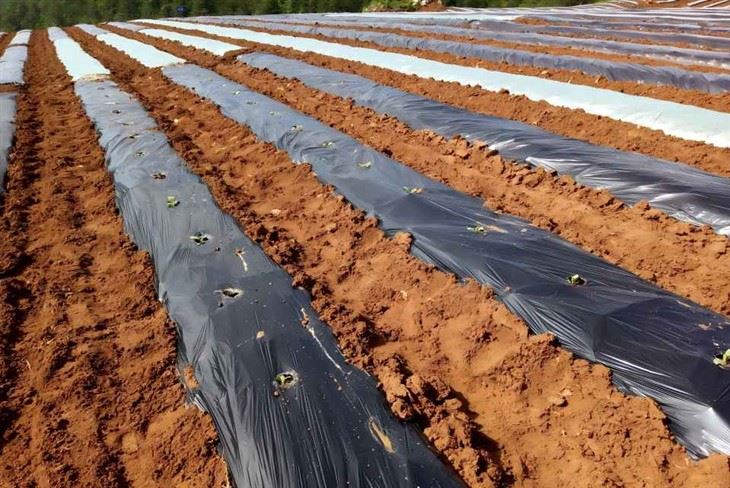
Innovative biodegradable agricultural film, wide range of use, improve microbial activity, tailor-made customized formulations, automatic degradation, easy to use and easy to operate, retain soil and water, regulate temperature, strong tensile strength, change the internal structure of the soil, improve crop yields, and increase agricultural income.
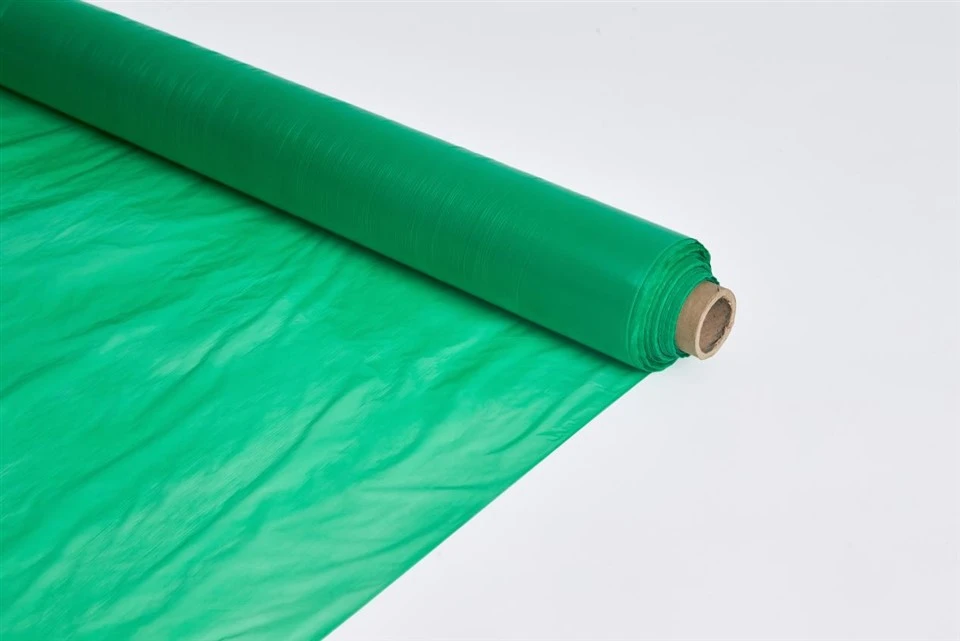
Green plastic mulch can increase soil temperature, suppress weeds, resist pests and diseases, maintain soil and water, save costs, increase yields and improve yields in a wide range of applications.
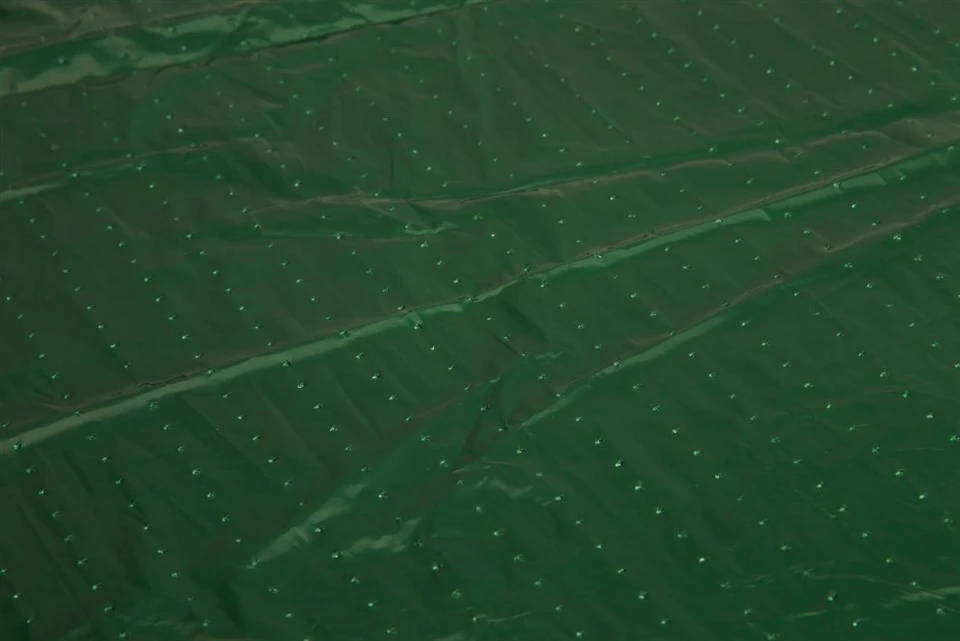
There are many types of perforated mulch, which regulates soil temperature, improves fertilizer utilization, maintains soil and water, increases nutrients, improves soil physical properties, prolongs photosynthesis time, and increases light, yield, and accumulation of organic matter, and is personalized to meet a variety of customer needs.
These are degradable mulch that can biodegrade as a result of the action of microorganisms such as bacteria, fungi or algae. The biodegradation process produces carbon dioxide, water, inorganic compounds and biomass, which are not only harmless to the soil and crops, but also an additional source of fertilization, although limited, of course. It' s important to make a distinction with oxo-degradable plastics, which are manufactured from conventional polyethene with oxo-fragmentable additives that break down the polyethene into small pieces, thus favouring the contamination of agricultural soils with microplastics.
Advantages of Degradable Mulch
Break down naturally over time
One significant advantage of biodegradable mulching materials is their ability to break down naturally over time, eliminating the need for manual removal and disposal at the end of the growing season.
Improved soil health
As these materials decompose, they release organic matter into the soil, enhancing soil structure, microbial activity, and nutrient content.
Environmental protection
Degradable mulch can decompose by itself in the natural environment and will not produce toxic substances harmful to the environment and human health. The biodegradable plastic raw materials used can also be recycled and reused without wasting resources.
Energy saving
Degradable mulch has functions such as moisturizing, heat preservation, and crop protection, and can reduce agricultural production costs and save resources.
Degradable Mulch Are Favored by the Market
Agricultural degradable mulchs are widely used in specialty crop production systems because of their agronomic benefits. Biodegradable plastic mulches (BDMs) offer an environmentally sustainable alternative to conventional polyethylene (PE) mulch. Unlike PE films, which need to be removed after use, BDMs are tilled into soil where they are expected to biodegrade. However, there remains considerable uncertainty about long-term impacts of BDM incorporation on soil ecosystems. BDMs potentially influence soil microbial communities in two ways: first, as a surface barrier prior to soil incorporation, indirectly affecting soil microclimate and atmosphere (similar to PE films) and second, after soil incorporation, as a direct input of physical fragments, which add carbon, microorganisms, additives, and adherent chemicals. The combined findings indicated that when used as a surface barrier, plastic mulches altered soil microbial community composition and functioning via microclimate modification, though the nature of these alterations varied between studies. In addition, BDM incorporation into soil can result in enhanced microbial activity and enrichment of fungal taxa. This suggests that despite the fact that total carbon input from BDMs is minuscule, a stimulatory effect on microbial activity may ultimately affect soil organic matter dynamics. To address the current knowledge gaps, long term studies and a better understanding of impacts of BDMs on nutrient biogeochemistry are needed. These are critical to evaluating BDMs as they relate to soil health and agroecosystem sustainability.
Indirect Effects of Degradable Mulch on Soils Microclimate
One way that degradable mulch may indirectly affect soil ecosystems and microbial community functioning is via modification of soil microclimate and atmosphere. As a barrier on the soil surface, degradable mulch reduce evaporation and gas exchange, increase temperature and reduce light transmissivity. The extent of these modifications depends on their physicochemical properties; for example, PE degradable mulch result in greater warming compared to BDMs and are less vapor-permeable resulting in accumulation of soil CO2. By serving as a barrier to evaporation, plastic mulches can result in increased soil moisture levels which can ultimately alter soil physical structure; for example by increasing the proportion of water stable aggregates . Favorable moisture and temperature conditions under degradable mulch also affect plant roots, typically stimulating root development and increasing root exudation. This results in greater nutrient availability for rhizosphere microorganisms. Since levels of soil moisture, temperature, vapor diffusivity and presence of roots modulate microbial activity, it follows that modifications to soil microclimate under plastic mulches affect soil microbial communities. Degradable mulch can also decrease populations of soil invertebrates, which may reduce top-down grazing pressures on soil microbes. In addition to changes in microbial community structure, plastic film mulches affect microbial functioning. Some studies report increased microbial activity under mulches, while others report decreased activity. The response is most likely dependent on the amount of warming under the mulches: where ambient temperatures are cool, mulches bring soil temperature closer to microbial optima and increase activity, whereas in warmer seasons, the mulches may push temperatures above optima, limiting soil microbial activity. The changes in microbial activity ultimately influence nutrient cycling and storage. The effect of plastic on soil organic carbon (SOC) is the result of the balance between increased root growth and exudate secretion, and microbial decomposition and loss to CO2. It should be noted that changes in SOC take place over longer time intervals, so the short term nature of most mulching experiments do not capture these longer term dynamics. Degradable mulch also affects cycling and losses of nitrogen in soils. Because degradable mulch improves water use efficiency , nitrate leaching is reduced.
Degradable mulchs are a promising alternative to PE plastic film mulches. However, there are considerable gaps in our understanding of how long-term use of BDMs affects soil ecosystems that are critical to crop productivity. Effects of conventional PE mulches on soil microclimate, microbial communities and biogeochemistry provide insight into how BDMs may be indirectly influencing soil. As a surface barrier, plastic mulches can alter soil microbial community composition and functioning in terms of carbon and nitrogen cycling via microclimate modification, though the nature of these alterations has varied between studies. Repeated tilling of BDM fragments into soil may alter the soil physical environment and act as a new source of carbon for microbes. In this regard, effects of BDMs on soils are unique compared to other plastics. The dearth of research directly comparing BDMs to PE renders it difficult to tease apart whether BDMs have an impact on soil microbes and their activities above and beyond what would be expected from a PE plastic film. The few available comparative studies show that microbial activity is enhanced under BDMs. This suggests that despite the fact that total carbon input from BDMs is minuscule, a stimulatory effect on microbial activity may contribute to soil microbial biomass and ultimately soil organic matter. First, studies to date have focused on short term effects, generally one or two growing seasons, or acute toxicity, so long term effects are unknown. Second, the relationship between plastic composition and microbial responses needs exploration: different types of biodegradable plastics will likely differentially affect soil microbes, based on both the parent polymer composition and breakdown products. Third, additives have been demonstrated to leach out of plastic and affect plants; but their effects on soil microbes are unknown. Fourth, several studies have indicated that BDMs may stimulate decomposition; however, effects on nutrient biogeochemistry are largely unexplored. To address these knowledge gaps, long term studies are needed to assess soil health and sustainability impacts, particularly with respect to soil carbon and/or chronic toxicity effects.
Difference Between Biodegradable Mulch and Biobased
"Biobased" and "biodegradable" are essential and helpful terms when it comes to understanding degradable mulch, yet these terms are often poorly misunderstood, hence miscommunicated. This fact sheet differentiates these terms and others related to degradable mulch. Mulches provide crop production benefits, including weed control. However, nutsedge can be a very destructive weed that will break through both polyethylene and degradable mulch. Paper mulch prevents nutsedge emergence, providing growers with a mulch that can be used when nutsedge control is needed. This accumulation of micro- and nanoplastics in terrestrial environments, including agricultural soil, which has received little attention compared to plastics in marine environments. Plastics are used routinely in agriculture, and degradable mulch may reduce future additions of micro- and nanoplastics to agricultural soil. Polyethylene (PE) mulch has been widely used in vegetable production for decades due to its many benefits, such as weed control, moisture retention, decreased disease pressure, early harvest, and increased yield and quality, among others. Similarly, degradable mulch use is on the rise as it provides many of the benefits of PE mulch with the advantage of being tilled in or composted at the end of the season, avoiding the disposal problems of PE. Though weed control is among the benefits of PE mulch and BDM, nutsedge purple nutsedge and yellow nutsedge can penetrate both PE mulch and plastic BDM. This creates holes in the mulch allowing other weeds to emerge, making removal of the plastic more difficult, and can cause significant yield losses. Fumigation and herbicide applications are limited and mechanical or hand weeding can be expensive leading some growers with nutsedge infested fields to abandon vegetable production until the weed can be controlled. Paper (cellulose) mulch has been shown to prevent the emergence of nutsedge.
How Should the Soil Be Prepared to Place the Degradable Mulch
Currently, there's a wide variety of mulch used in agriculture to improve the quality of the land and crops. Among them are biodegradable mulch, which is becoming increasingly popular thanks to their characteristics that make them more economically efficient and environmentally friendly. For some years now, there has been an increase in campaigns focused on raising awareness among the population regarding the importance of reducing the use of plastics and products that contain them. As a result of that, more companies and agricultural producers are looking for alternatives that allow them to use mulching that, aside from being more environmentally friendly, allows them to maintain the quality of the products they grow.One of the best alternatives is degradable mulch, since, although many of these plastics are made from polymers, they can biodegrade and serve as a compostable material to reduce environmental impact as they end up being incorporated into the soil. In addition to the action exerted by microorganisms such as bacteria, fungi or algae, the degradation of biodegradable mulch is caused by the intervention of diverse factors such as climate, solar radiation received and the growing season among others, so farmers are attentive to establish the most appropriate time for ploughing, which will end the degradation process. Now, before using degradable mulch, an exhaustive analysis or specific tests must be made to determine whether the intended use of the plastic is appropriate, thus guaranteeing the expected useful life of the film. The soil should be prepared in advance to prevent leaving behind stones or other sharp and protruding objects that could stick out of the ground and damage the plastic. Growers must be very careful to avoid installing plastic mulch on soils with high moisture levels or, on the contrary, when organic fertilizer has been incorporated into them to avoid the premature degradation of the mulch. It's important to be very careful to avoid placing the plastic immediately after the application of organic fertilizers. The ideal scenario is to wait at least four weeks to ensure that no residues remain, otherwise they may accelerate the biodegradation of the biodegradable mulch as a result of microbial activity associated with the fertilizer. The installation of biodegradable mulch is a standard procedure that doesn't require special machinery, so the same equipment can be used when laying conventional polyethene mulch. However, it's important to reduce the film tension and machine speed when placing the biodegradable mulch to avoid tearing or deterioration due to excessive stretching. It is recommended that growers preparing the land for the placement of the mulch dig a small trench or furrow where they can place the irrigation tape so that it doesn't come into direct contact with the plastic film, avoiding possible burning of the drip lines. It's also necessary to work on non-compacted soil to avoid the risk of breakage of the plastic with the sharp clods or stones that may be present in the soil.
The long-awaited moment has arrived: planting, and to do so it is best to proceed immediately after having placed the degradable mulch, so you can take full advantage of all its benefits. Keep in mind that planting should never exceed 4 days after the installation of the plastic since premature degradation by solar radiation may occur and the properties of the film would no longer be the same. It should be remembered that the use of biodegradable plastic mulch doesn't imply variations in water consumption, irrigation flow, or changes regarding a conventional plastic material. Due to the special characteristics of this type of film, it is recommended to store degradable mulch in a warehouse that's properly conditioned to protect it from humidity, sunlight and other heat sources that may compromise its integrity and quality, as well as to try to keep it in its original packaging. One of the recommendations always made to growers is to use the mulch in the same crop season, once purchased, even though plastic mulch rolls can be stored and kept for a reasonable period of time. However, it all depends on whether the plastics are properly stored and protected according to the manufacturer's instructions. Improper handling during storage can cause damage to the core or to the plastic sheet, compromising its integrity and affecting the unwinding process. As we have mentioned, the degradation of a plastic mulch with degradable mulch qualities will depend on factors such as climate, temperature, microbiological agents in the soil, humidity, and handling. However, once cultivation is finished the plastic can be left in the soil to finish degrading completely. They are most frequently used in traditional agriculture. The correct disposal process is to collect the used plastics from the field, once the harvest is finished, and deliver them to an authorized manager of used agricultural plastics who in turn transports them to a recycler who will recover them.
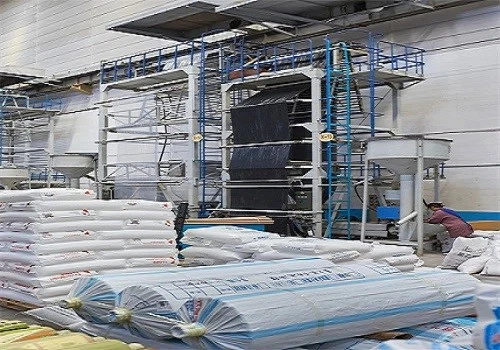
Our Factory
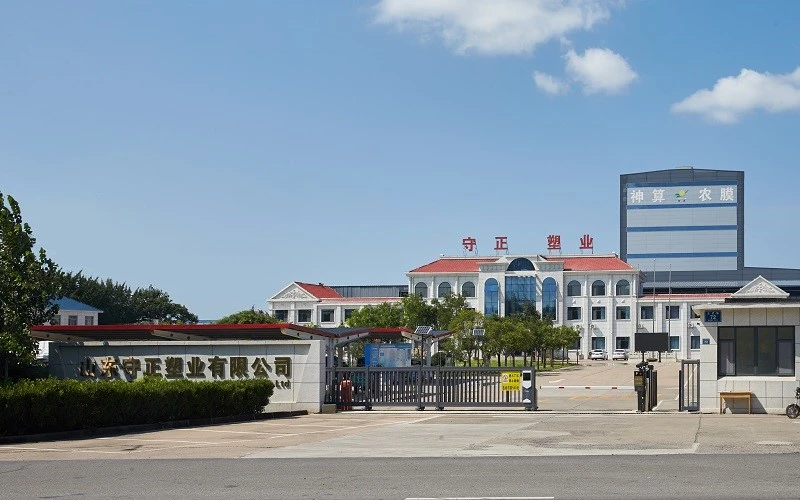
We are an established manufacturer of agricultural film in China with over 30 years of experience in the industry. Our mission is to empower farmers globally with advanced and innovative solutions that help them achieve better crop yields while promoting environmental sustainability. At our state-of-the-art production facility, we use the latest technology and quality materials to manufacture a wide range of agricultural films, including greenhouse films, silage films, mulch films, and more. Our films are designed to resist harsh weather conditions, enhance crop growth, and protect against pests and diseases.


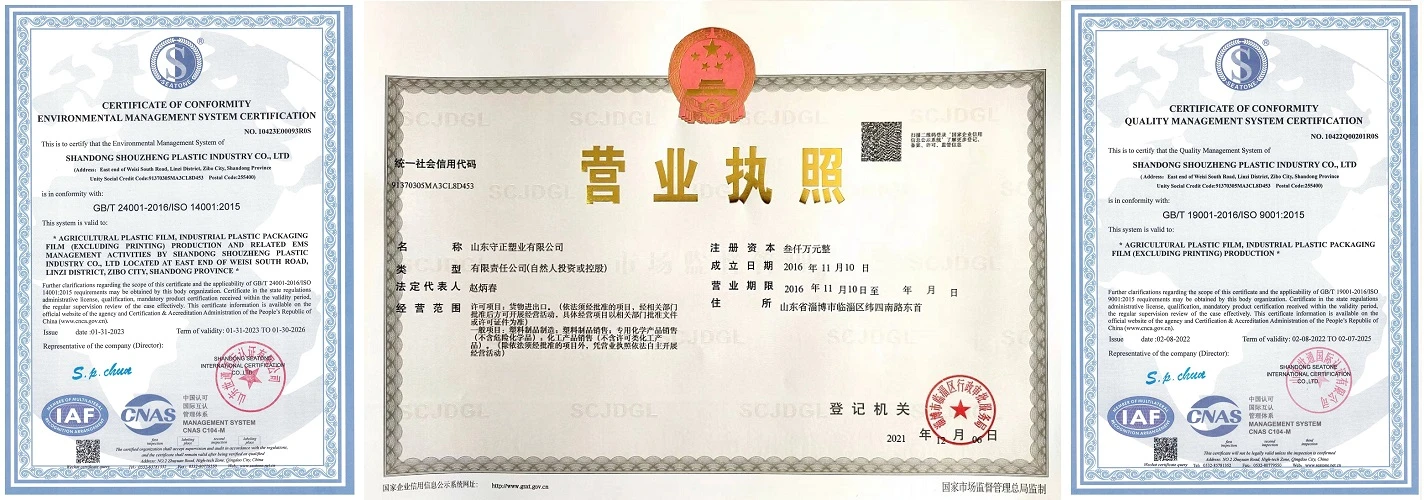
Our certificate
FAQ
Hot Tags: degradable mulch, China degradable mulch suppliers, factory, Perforated Mulch, Degradable Mulch, Drip Plastic Film, Green Plustic Mulch, PO Agriculture Greenhouse Plastic Film, Fine Long life Flow Drop Reducing Film and Long life Flow Drop Film Series