


What is Composite Geomembrane
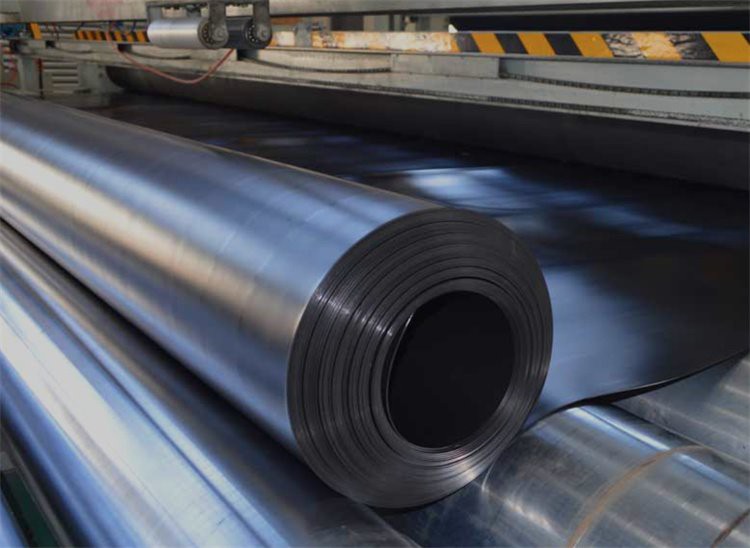
Composite geomembrane is an impermeable material composed of geotextile and geomembrane liners. It is used for anti-seepage. The composite membrane is divided into one geotextile and one geomembrane and two geotextiles and one geomembrane. High physical and mechanical performance indicators such as tensile strength, tear resistance, bursting, etc., can meet the needs of civil engineering such as water conservancy, municipal administration, construction, transportation, subway, tunnel, etc. Since the composite geomembrane liner is made of polymer materials and an anti-aging agent is added in the production process, it can be used in an unconventional temperature environment.
High anti-seepage coefficient
Composite geomembrane has an anti-seepage effect that is unmatched by ordinary waterproof materials. It has high tensile mechanical properties, and its excellent elasticity and deformation ability are very suitable for expansion and contraction of the base surface.
Chemical stability
Composite geomembrane has good chemical stability and is widely used in sewage treatment, chemical reaction tanks, and landfills.
Anti-aging properties
Composite geomembrane has anti-aging, anti-ultraviolet, and anti-decomposition capabilities. It can be used naked and has a material life of 50 to 70 years. It provides good materials for environmental seepage prevention and ensures plant root systems.
Fast construction speed
Composite geomembrane has high flexibility and various laying forms to meet the anti-seepage requirements of different projects. It adopts hot-melt welding, high welding strength, and convenient and quick construction.

Why Choose Us
High quality
Our products are manufactured or executed to a very high standard, using the finest materials and manufacturing processes.
Professional team
Our professional team collaborates and communicates effectively with each other, and is dedicated to delivering high quality results. We are capable of handling complex challenges and projects that require our specialized expertise and experience.
Advanced equipment
A machine, tool or instrument designed with advanced technology and functionality to perform highly specific tasks with greater precision, efficiency and reliability.
24H online service
We try and respond to all concerns within 24 hours and our teams are always at your disposal in case of any emergencies.
Composite Geomembrane Application
Composite geomembrane is suitable for water conservancy. Such as anti-seepage, plugging, reinforcement of dams of rivers, lakes, and reservoirs, anti-seepage of canals, vertical core walls, slope protection, etc.
Composite geomembrane can be used for environmental protection and sanitation. Such as landfills, sewage treatment plants, power plant conditioning pools, industrial, hospital solid waste, etc.
Composite geomembrane can be used in gardens, artificial lakes, rivers, reservoirs, pond bottoms of golf courses, slope protection, green lawns, etc.
Composite geomembrane can also be used for municipal engineering, subway, underground engineering of buildings, planting roofs, seepage prevention of roof gardens, and sewage pipes.
Composite geomembrane is suitable for mining, washing tanks, heap leaching tanks, ash dumps, dissolution tanks, sedimentation tanks, storage yards, tailings bottom lining anti-seepage, etc.
Petrochemical, chemical plants, refineries, oil storage tanks, seepage prevention, chemical reaction tanks, sedimentation tank linings, secondary linings, etc. can still use composite geomembrane.
The composite geomembrane is also used in aquaculture, intensive, factory farming ponds, fish ponds, lining of shrimp ponds, sea cucumber circle slope protection, and other fields.
Composite geomembrane can be used in the Salt industry, salt field crystallization pond, brine pond cover, salt geomembrane, and salt pond plastic geomembrane.
Composite geomembrane is also used in agriculture, reservoirs, drinking water pools, storage ponds, and anti-seepage irrigation systems.
Transportation facilities, foundation reinforcement of highways, and seepage prevention of culverts can be constructed with a composite geomembrane.
Composite Geomembrane Construction
The composite geomembrane is heated by far-infrared in an oven on one side or both sides of the geomembrane, and the geotextile and the geomembrane are pressed together by a guide roller to form a composite geomembrane. With the improvement of production technology, there is also a process of making composite geomembrane by casting method. Its form has one cloth and one film, two cloths and one film, two films and one cloth, etc.
The geotextile is used as the protective layer of the geomembrane to protect the impermeable layer from damage. To reduce ultraviolet radiation and increase anti-aging performance, it is best to use the buried method.
During construction, first, use sand or clay with a smaller diameter to level the base surface, and then lay the geomembrane. The geomembrane should not be stretched too, and the buried soil at both ends is corrugated. Finally, a transition layer of about 10cm is laid on the geomembrane with fine sand or clay. A 20-30cm block stone (or prefabricated concrete block) is built as an impact protection layer. During construction, try to avoid the stones hitting the geomembrane, and it is best to construct the protective layer while laying the geomembrane. The connection between the composite geomembrane and the surrounding structures should be anchored by expansion bolts and steel plate battens, and the connection parts should be painted with emulsified asphalt (thickness 2mm) to prevent leakage.
Composite Geomembrane Construction Matters
1. The use must be embedded, the thickness of the cover should not be less than 30cm.
2. The renovation anti-seepage system should consist of, a cushion layer, anti-seepage layer, transition layer, and protective layer.
3. The soil body should be solid, to avoid uneven subsidence, cracks, and the turf and tree roots within the anti-seepage range should be removed. Sand or clay with small particle size is laid on the contact surface with the membrane as a protective layer.
4. When laying, the geomembrane should not be pulled too. It is better to embed the soil at both ends into a corrugated shape, especially when it is anchored with rigid materials, there should be a certain amount of expansion and contraction.
5. During construction, stones should be avoided, and heavy objects should be smashed on the geomembrane. It is best to lay the membrane and cover the protective layer during construction.
Composite Geomembrane Design Material
1. Select the appropriate type and specification according to the project nature, category, application site, use conditions, design requirements, etc.
2. Determine the thickness of the geomembrane according to the required strength of the water pressure in the engineering design, as well as the application conditions such as exposure, buried pressure, climate, and service life.
3. Determine the width and length of the geomembrane according to the actual size, area, construction conditions, and construction capacity of the project, and the principle of smallest seams during construction.
4. When the base layer is a concrete structure, it is advisable to choose a filament non-woven composite soil geomembrane that can be bonded to the cement base layer.
5. It is used for anti-seepage treatment on highways. Generally, one geotextile and one geomembrane 200-300g/m are used for anti-seepage at the lower part of the central divider.
Composite geomembranes can be manufactured from a variety of materials, so the specific properties of any given combination will vary. However, it's safe to say that many similar qualities are targeted. When you're selecting from a variety of similar options, keep in mind the most important qualities for your specific application and weigh the candidates based on their individual performance in those areas.
Here are some commonly sought-after properties in composite geomembranes:
Excellent impermeability to liquids, especially water
Durability, especially resistance to punctures and tears
Options for textured or smooth surfaces
Continued flexibility and resistance to damage from extreme cold
Resistant to degradation from elevated temperatures and environmental exposure
High strength, good elongation (ability to stretch), and the ability to maintain its shape even under high stress.
High resistance to chemical damage, including acids, alkali, and corrosive materials.
What Is the Similarity of Composite and Textured Geomembrane
Material composition
The base layer of composite geomembrane is made by HDPE Geomembrane, this is similar with textured geomembrane. The out layer is made with geotextile (Based fabric can be filament or short fiber needle punched geotextile). The specific materials and their thicknesses can vary based on project requirements and environmental conditions.
Textured Geomembrane is a kind of geomembrane with texture structure on one or both sides. It is produced through a special production process of HDPE geomembrane. The texturing features are improving the interface shear strength and preventing slippage. This makes textured geomembranes particularly useful in applications where slope stability and resistance to sliding are essential.
Seepage prevention
Composite geomembrane and textured geomembrane both have good seepage prevention performance. The geotextile in the composite geomembrane can protect the geomembrane very well, prevent it from being punctured by sharp objects, and has a good filtering effect. On the basis of anti-seepage, textured geomembrane also has better interface friction coefficient and UV Resistance.
Geomembrane installation flexibility
Both composite and textured geomembrane products are relatively convenient to install and have strong ability to adapt to the environment. According to our construction experience, a skilled worker can weld 2000-3000 square meters a day. The most important thing is to keep the construction site flat and prevent sharp objects from puncturing the product.
What is the Difference Between Composite And Textured Geomembrane
The main difference is the material composition and structure. According to different needs, composite geomembranes are mainly divided into three types:
One geotextile two geo Base geotextile fabric is 100~1000g/m2, geomembrane thickness generally is 0.5~1.5mm;
One geotextile one geo Base geotextile is 100~1000g/m2, geomembrane thickness generally is 0.5~1.5mm;
Two geotextiles one geo Base geotextile is 80~600g/m2, geomembrane thickness generally is 0.5~1.5mm;
Textured geomembrane are mainly divided into two types.
One side textured geomembrane. Asperity Height from 0.25mm to 0.4mm
Two side textured geomembrane. Asperity Height from 0.25mm to 0.4mm
The most apparent difference is the surface texture.
Composite geomembrane is composed of one or two layers of geotextile, which are combined with the geomembrane through hot melting. It remains the mechanical properties of base fabric and uniformity of film which improve the impermeability .
The surface texture of textured geomembrane is rough and uneven, with a certain roughness. This texture is mainly achieved through the special process technology during the production process of the geomembrane. The surface texture of the textured geomembrane can effectively increase the contact area between the geomembrane and the soil, improve the anti-seepage performance and load-bearing capacity of the geomembrane, and enhance its anti-aging and wear resistance.
The manufacturing process for textured geomembranes involves creating a surface with irregularities or patterns. Common methods of texturing include spray, Co-extruded, Embossing. The textured surface increases the friction between the geomembrane and the soil and enhances its stability.
The manufacturing process of composite geomembranes involves combining different layers of geosynthetic materials to create a product with specific engineering properties. Common bonding methods include Heat Welding, Adhesive Bonding, Calendering. The composite geomembrane has high physical and mechanical properties such as tensile strength, tear resistance, and burst resistance.
Textured geomembranes are designed with an uneven surface that provides excellent anti-slip properties. This unique feature makes them highly suitable for applications in sloped terrains or areas where traction is of utmost importance. IThe geotextile layer(s) in a composite geomembrane can contribute to anti-slip properties indirectly. By providing additional strength and reinforcement to the geomembrane, the geotextile layer enhances the overall stability of the liner system.
Composite geomembranes and Textured geomembranes are widely used in many fields, The choice between composite and textured geomembranes depends on specific project requirements, such as impermeability, slope stability, and anti-slip properties.
Textured geomembrane is widely used for the following industries.
Oil and gas. Chemical plant, Refinery, Oil storage tank, etc.
Solid or Liquid waste treatment. Landfill, Waste water plant. Industrial or hospital waste treatment site anti-seepage
Water conservancy project. River embankment, Lake dam. Tailing dam. Sewage dam and reservoir. Channel. Vertical wall. Slope protection seepage control.
Composite geomembrane applied to waterproofing lining of dam or canal and anti-pollution of waste plant, like landfill, mining and tailings, and more.
How Is Geomembrane Manufactured
Geomembranes are manufactured through a process that involves extrusion or calendering, depending on the type of material being used. The most common materials used for geomembranes are high-density polyethylene (HDPE), low-density polyethylene (LDPE), polyvinyl chloride (PVC), and ethylene propylene diene monomer (EPDM). Here's a general overview of the manufacturing process for geomembranes:
Material Preparation
The raw polymer resin is first processed and compounded with additives such as antioxidants, stabilizers, UV inhibitors, and colorants to enhance the material's properties and performance.
Extrusion or Calendering
The compounded resin is then fed into an extruder or calendering machine, where it undergoes heating and pressure to melt and form a continuous sheet of geomembrane.
Extrusion
In the extrusion process, the molten resin is forced through a die to produce a continuous sheet of geomembrane with a uniform thickness. The extruded sheet may then be cooled and rolled onto large spools for further processing.
Calendering
In the calendering process, the molten resin is passed through a series of heated rollers to form a continuous sheet of geomembrane with a consistent thickness. The calendered sheet may undergo additional cooling and treatment before being wound onto rolls.
FAQ
Q: What is the composition of geomembrane?
Q: What is the purpose of a geomembrane?
Q: What is the difference between geotextile and geomembrane?
Q: What is the difference between PVC and HDPE geomembrane?
Q: What is the difference between GCL and geomembrane?
Q: What is the life expectancy of a geomembrane?
Q: What is the life expectancy of a geomembrane liner?
Q: What is geomembrane in road construction?
Q: Is geomembrane permeable?
Q: What is a geomembrane for canal lining?
Q: What is the application of geomembrane in civil engineering?
Q: What is the minimum thickness of geomembrane?
Q: What is EPDM geomembrane?
Q: How thick is a geomembrane liner?
Q: What is the composition of HDPE geomembrane?
Q: Which is cheaper HDPE or PVC?
Q: Which is stronger HDPE or PVC?
Q: What are the properties of geomembranes?
Q: Is a GCL a geomembrane?
Q: What is geomembrane in mining industry?
Hot Tags: waterproof impermeable pe five-layer composite geomembrane, China waterproof impermeable pe five-layer composite geomembrane suppliers, factory, EVA Agricultural Film Series Products, Degradable Mulch, Longevity Agricultural Film, Green Plustic Mulch, Agricultural Film, Special Film for Animal Husbandry